

The dust has finally settled on the 2026 World Cup after Spain was crowned the soccer champion of the world on Sunday, but online sportsbooks are already looking ahead to the next global competition in 2030 by releasing early outright odds.
Spain is favoured to repeat with short +450 odds, with global soccer powerhouses France (+600), Portugal (+700), Brazil (+800), and England (+800) following closely behind.
Spain to win the 2030 World Cup

Let’s take a closer look at the 2030 World Cup outright odds for the top 20 nations:
2030 World Cup Odds (Top 20)
| Team | Outright Odds |
| Spain | +450 |
| France | +600 |
| Portugal | +700 |
| Brazil | +800 |
| England | +800 |
| Germany | +1000 |
| Argentina | +1200 |
| Morocco | +2500 |
| Netherlands | +2500 |
| Belgium | +3300 |
| Italy | +3300 |
| Colombia | +4000 |
| Norway | +4000 |
| Japan | +6600 |
| Mexico | +6600 |
| Switzerland | +6600 |
| Turkiye | +6600 |
| Uruguay | +8000 |
| USA | +8000 |
| Croatia | +12500 |
| Canada | +50000 |
Canada opens with 500-1 odds
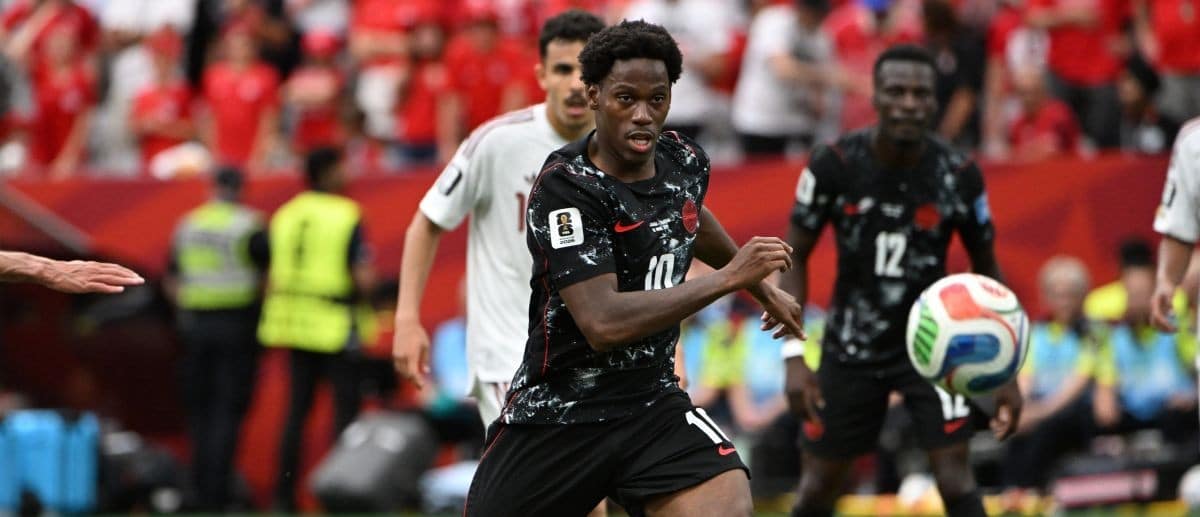
After making an unprecedented run to the Round of 16 in 2026, Canada has early +50000 odds to win the 2030 World Cup.
Canada is ranked 30th in the FIFA World Rankings, but will likely see an improvement on those rankings by the next update on October 7 following a historic performance at the 2026 World Cup.
Canada finished second in its group with a 1-1-1 record before earning a 1-0 victory over South Africa in the Round of 32. Morocco staged an impressive 3-0 victory over Canada in the Round of 16 to oust the Canadians from the event partially being played on their home soil.
Canada had only qualified for the World Cup twice before 2026, posting an ugly record of zero wins and six losses.
World Cup qualification matches will begin in 2027, with Canada participating in the CONCACAF region qualifiers.
Canada to win the 2030 World Cup
About the 2030 World Cup
The 2030 FIFA World Cup will be unlike any edition of the tournament that has come before it.
Held to mark the 100th anniversary of the first World Cup in 1930, the tournament will span six host nations across three continents. Spain, Portugal and Morocco will stage the majority of the 48-team competition, while Uruguay, Argentina and Paraguay will each host an opening match as part of FIFA’s centenary celebration.
The unprecedented hosting arrangement reflects the tournament’s historic milestone and will make the 2030 World Cup the first to be played in Europe, Africa and South America during the same competition.
Spain, Portugal and Morocco were confirmed as the joint hosts after FIFA approved the only bid for the tournament. Uruguay, Argentina and Paraguay were awarded the opening matches to honour the inaugural World Cup, which was held in Uruguay in 1930. All six host nations qualify automatically for the tournament.
The expanded 48-team format introduced for the 2026 World Cup will likely remain in place, with 104 matches expected to be played over roughly six weeks. However, there are talks about potential expansion to 64 teams. Those details will be ironed out much closer to the event.
Spain brings considerable World Cup pedigree to the tournament. It previously hosted the competition in 1982 and lifted the trophy for the first time in 2010. Portugal, meanwhile, has never won a World Cup despite producing some of the game’s greatest players, including Cristiano Ronaldo.
Morocco will become only the second African nation to host the men’s FIFA World Cup after South Africa welcomed the tournament in 2010. The country strengthened its reputation on the international stage with its historic semifinal appearance at the 2022 World Cup, the deepest run by an African nation in tournament history.
South America’s role in the centennial celebration carries special significance. Uruguay’s Estadio Centenario, which hosted the first World Cup final 100 years earlier, is expected to serve as one of the tournament’s symbolic venues. Argentina, one of football’s traditional powers, and Paraguay, home to CONMEBOL’s headquarters, will also host opening matches before the competition moves to Europe and Africa.
The tournament’s unique structure presents logistical challenges, with participating teams and travelling supporters required to cross the Atlantic following the opening matches. FIFA has maintained that the format appropriately recognizes the World Cup’s centenary while showcasing the sport’s global reach.
Preparations are already underway across the primary host nations. Spain and Portugal will rely on several established stadiums that regularly host UEFA competitions, while Morocco is planning significant infrastructure investments, including the proposed Hassan II Stadium near Casablanca, which could become one of the world’s largest football venues.
Beyond the competition itself, the 2030 World Cup represents a milestone in the evolution of international soccer. What began as a 13-team tournament in Uruguay has grown into a global event featuring 48 nations and billions of viewers worldwide.