

Summer has officially arrived, driving millions of us straight into nature. Whether you are packing up the sedan for a camping trip, firing up the grill in a suburban backyard, or taking a dip at the local beach, spending more time outside means stepping directly into territory claimed by America’s wildlife.
It begs the question, where in North America are you most likely to be attacked by an animal? And what animals are most likely to attack?
We tracked real life mortality rates from 2018 to 2024 to find the most dangerous animal in every state and province.
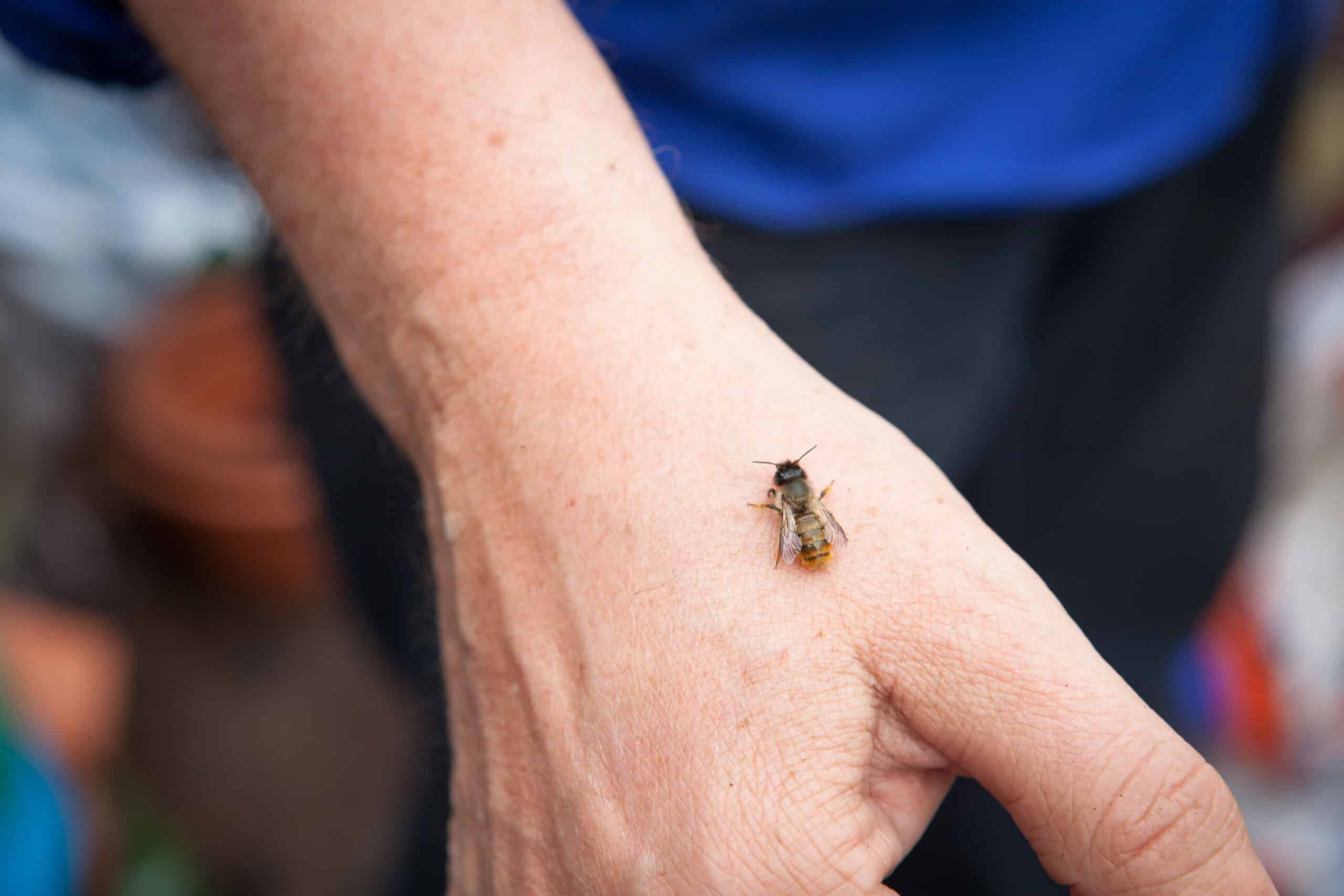
The results? Forget sharks and bears, bees should have you shaking in your hiking boots.
Key Findings
- Bees are the most dangerous creatures in North America, responsible for an average of 85.4 deaths per year, with an annual risk probability of 0.00002550% or 1 in 3,921,000.
- Horses and animal-drawn vehicles and domestic dogs round out the top three deadliest animal categories.
- Only Hawaii’s most dangerous animal is sharks.
- Adjusting for population, Montana ranks #1 for fatal animal encounters, with a death rate of 3.63 per 1 million people.
- New Mexico (#2) and Wyoming (#3) round out the top three most dangerous states.
- New Jersey is the safest state for animal attacks, followed by Massachusetts and New York.
- Across almost every Canadian province, large herbivores like moose and deer present the highest public safety risk.
- Nunavut is the only place where polar bears are the most dangerous animals.
Most Dangerous Animals
| Rank | Animal Category | Average Annual Deaths | Annual Risk Probability | Implied Personal Odds (Per Year) |
|---|---|---|---|---|
| 1 | Bees, Wasps & Hornets (Stings) | 85.4 | 0.00002550% | 1 in 3,921,000 |
| 2 | Horses / Animal-Drawn Vehicles | 81.3 | 0.00002430% | 1 in 4,121,000 |
| 3 | Domestic Dogs | 78.1 | 0.00002330% | 1 in 4,287,000 |
| 6 | Other Mammals (Livestock) | 6.3 | 0.00002280% | 1 in 4,391,000 |
| 4 | Other Venomous Arthropods | 13.4 | 0.00000400% | 1 in 24,942,000 |
| 5 | Nonvenomous Insects | 8.7 | 0.00000260% | 1 in 38,443,000 |
| 7 | Venomous Spiders | 5 | 0.00000150% | 1 in 66,971,000 |
| 8 | Venomous Snakes & Lizards | 4.9 | 0.00000150% | 1 in 68,941,000 |
| 9 | Marine Animals (Sharks/Alligators) | 1.6 | 0.00000050% | 1 in 213,276,000 |
Most Dangerous Animal In Each State – Map
Top 10 Most Dangerous States for Animal Encounters
While populous states see higher raw volumes of incidents, adjusting for population reveals where humans and hazardous animals cross paths most frequently. If you’re looking for the highest statistical probability of a fatal encounter, these ten states lead the board.
1. Montana
- Annual Death Rate: 3.63 per 1M people
- Total Deaths: 28
- Leading Threat: Other Mammals (Livestock)
Montana takes the undisputed top spot on our board. While the state is famous for grizzly bears and mountain lions, the data shows that the real physical hazard lies in its thriving agricultural centers. Encounters with large livestock, particularly cattle, are the primary drivers making the Treasure State the statistical favorite for animal dangers.
2. New Mexico
- Annual Death Rate: 2.98 per 1M people
- Total Deaths: 44
- Leading Threat: Other Mammals (Livestock)
Securing the number two spot is New Mexico. Mirroring its northern neighbors, the Land of Enchantment features vast open ranch lands where human-livestock interactions outpace wildlife incidents. Working with large, unpredictable farm animals in rural terrains pushes New Mexico’s per-capita risk to near the top of the nation.
3. Wyoming
- Annual Death Rate: 2.95 per 1M people
- Total Deaths: 12
- Leading Threat: Other Mammals (Livestock)
Wyoming has a tiny human population footprint but a massive wildlife and livestock presence, landing it in third place. The sheer volume of square mileage dedicated to ranching means that handling large domestic mammals poses a significantly higher statistical risk to residents than encounters in more suburbanized states.
4. South Dakota
- Annual Death Rate: 2.38 per 1M people
- Total Deaths: 15
- Leading Threat: Other Mammals (Livestock)
South Dakota claims the fourth position on the leaderboard. The Mount Rushmore State’s high per-capita rate is strongly tied to farm and agricultural safety incidents. In rural communities where cattle handling is a daily reality, the physical risk of being kicked, stepped on, or gored remains the dominant threat.
5. Oklahoma
- Annual Death Rate: 2.35 per 1M people
- Total Deaths: 66
- Leading Threat: Domestic Dogs
Breaking the livestock trend at number five is Oklahoma, where the top hazard moves from the pasture to the neighborhood. Domestic dogs emerge as the leading animal-related threat here, accounting for a heavy share of the state’s 66 recorded fatalities over the tracking period.
6. Idaho
- Annual Death Rate: 2.28 per 1M people
- Total Deaths: 30
- Leading Threat: Other Mammals (Livestock)
Idaho rolls into the sixth slot with a steady baseline of large mammal hazards. Between rugged backcountry terrain and sweeping agricultural valley floors, the intersection of humans and heavy livestock keeps Idaho ranks high among the most statistically volatile states for animal interactions.
7. Alaska
- Annual Death Rate: 2.14 per 1M people
- Total Deaths: 11
- Leading Threat: Domestic Dogs
Alaska is practically synonymous with extreme wilderness, but the data offers a surprising twist. While high-profile bear or moose encounters get the media attention, domestic dog encounters remain the statistical leader among its isolated, low-density population centers, placing the Last Frontier at number seven.
8. Arkansas
- Annual Death Rate: 2.02 per 1M people
- Total Deaths: 43
- Leading Threat: Domestic Dogs
Securing the eighth position, Arkansas shows a strong pattern of residential and domestic animal incidents. While the Natural State features plenty of dense forests and swamp wildlands, human proximity to local domestic dog populations accounts for the vast majority of its fatal metrics.
9. West Virginia
- Annual Death Rate: 1.92 per 1M people
- Total Deaths: 24
- Leading Threat: Bees, Wasps & Hornets
West Virginia sneaks into the top ten at number nine as the highest-ranking state dominated by insects. The heavily forested, mountainous terrain of the Appalachian range places outdoor enthusiasts and rural residents in frequent contact with venomous stinging insects, where severe allergic reactions drive the numbers.
10. Mississippi
- Annual Death Rate: 1.84 per 1M people
- Total Deaths: 38
- Leading Threat: Bees, Wasps & Hornets
Rounding out the top ten is Mississippi. Similar to West Virginia, the Magnolia State’s warm climate, high humidity, and dense rural outdoor exposure create the perfect storm for encounters with aggressive bee, wasp, and hornet swarms, proving that the smallest pests can carry the heaviest risk.
The Safest States to Live In
If animal encounters are a major concern of yours, the urbanized Northeast is your safest bet.
New Jersey is officially the safest enclave in the country, maintaining an incredibly low animal fatality rate of just 0.33 per 1 million people. Massachusetts (0.43 per million) and New York (0.58 per million) aren’t far behind. In these highly developed regions, humans simply have a much lower baseline exposure to large livestock and unpredictable outdoor elements.
The Most Dangerous Animal In Each Province
- Across the vast majority of Canada, large herbivores (moose, deer, and elk) represent a vastly greater public safety threat than apex predators like bears, wolves, or cougars.
- Wildlife-vehicle collisions are the leading measurable cause of wildlife-related human harm in Canada, accounting for roughly 25 to 30 fatalities annually.
- Because Prince Edward Island features an isolated island infrastructure completely lacking resident moose herds or large native apex predators, Statistics Canada mortality tables show that anaphylactic shock from insect stings represents the province’s highest risk.
- While British Columbia records high volumes of backcountry bear and cougar conservation logs, the province’s narrow valley highways funnel animals and fast commuters into the same spaces. The Insurance Corporation of British Columbia (ICBC) reports over 11,000 wildlife collisions and roughly 870 serious injuries annually, with deer accounting for 75% to 80% of the toll.
- Nunavut represents the true geographic exception in Canada. It is the only jurisdiction where predatory polar bear entries represent a prioritized, documented public safety concern over vehicle collisions.
Looking for more likely odds than getting attacked by a polar bear? You can explore options for Ontario sports betting and Alberta sports betting to see available betting options in your area.
You’re Probably Fine
Before you cancel your summer camping plans and lock yourself indoors, let’s take a deep breath. While the data highlights some surprising hazards across North America, the ultimate takeaway should bring you peace of mind: your overall odds of dying from a wildlife attack are incredibly low.
To put the risks into perspective, you are statistically far more likely to be undone by a rogue yellowjacket at a backyard barbecue than a great white shark at the beach.
Keep in mind that this data specifically tracks fatalities and severe, life-altering injuries. It doesn’t capture every minor raccoon scratch, stray cat bite, or aggressive goose encounter. However, the odds back up that unless you are actively trying to wrestle a grizzly bear or pick a fight with a territorial moose, you are going to be completely fine.
Go ahead and enjoy the great outdoors this summer. Just do yourself a statistical favor: skip the heavy-duty anti-bear armor, pack plenty of bug spray, and give those pasture cows a respectful amount of space.
Methodology
To discover the United States’ most dangerous states for animal interactions, we analyzed underlying mortality data from the CDC WONDER Database, isolating 17 specific International Classification of Diseases (ICD-10) codes tied to direct animal contact, farm operations, and stings.
Canada does not maintain a single national mortality database that categorizes every animal-related injury or death by species (such as the CDC WONDER database in the United States), this project constructed a multi-source Animal Harm Index to evaluate regional risk profiles.
To determine the animal “most likely to seriously harm you” in each province or territory, data inputs were compiled, normalized, and evaluated using a three-pronged tier system:
- Human Fatalities (50% Weight): The most objective and critical measure of public safety risk. This combines multi-year tracking of wildlife-vehicle collisions, fatal domestic canine encounters, and insect sting anaphylaxis.
- Serious Injuries & Hospitalizations (30% Weight): Evaluates non-fatal but high-severity outcomes. This pulls from provincial insurance collision medical records, hospital admission codes for animal contact, and workers’ compensation injury filings.
- Incident & Collision Frequency (20% Weight): Measures daily exposure or raw encounter rates, ensuring areas with lower severe injuries but incredibly high localized conflict metrics (like Arctic polar bear tracking grids or rural deer-vehicle encounters) are accurately represented.