

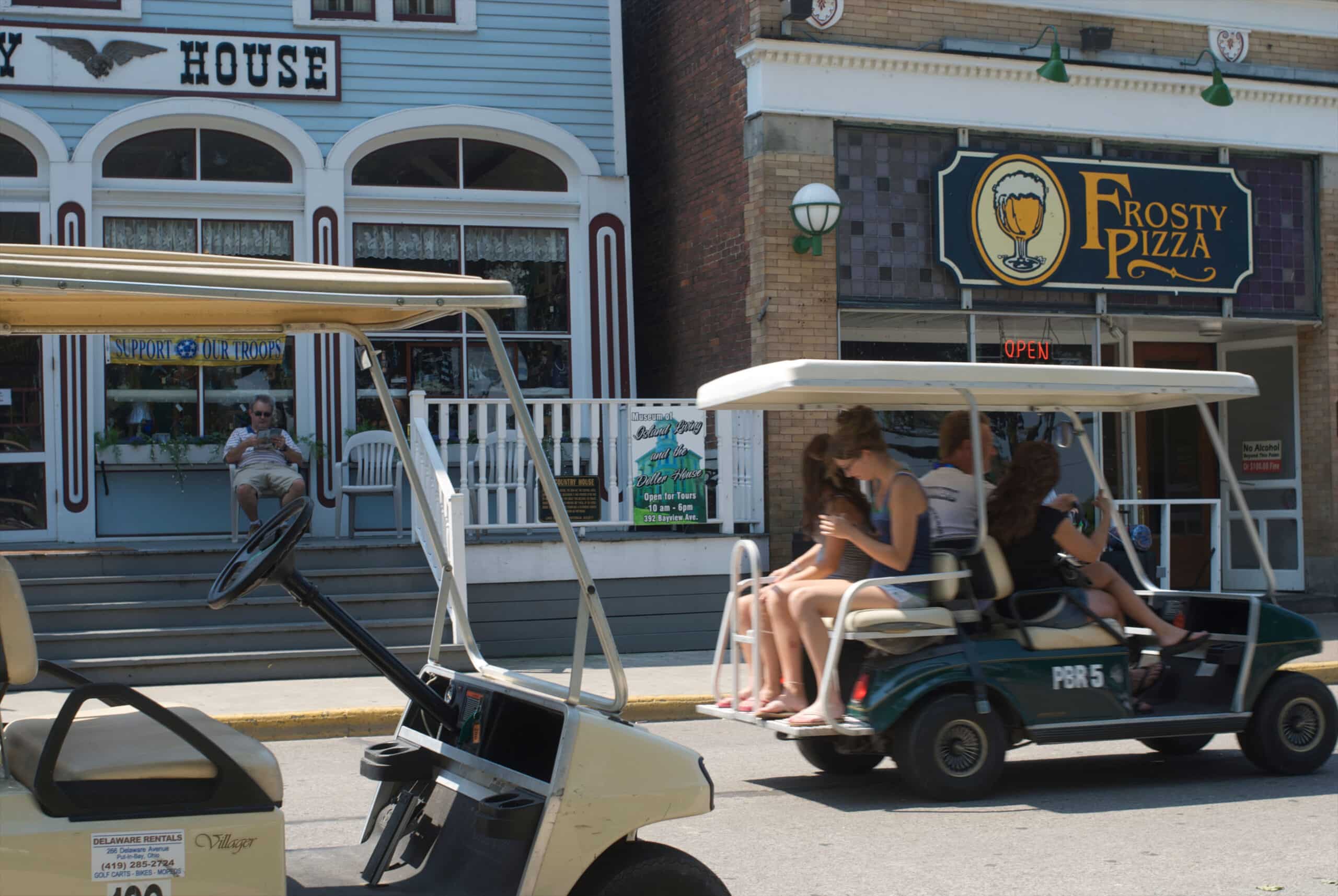
Golf carts are no longer just for the back nine. They’ve migrated from the fairway to the cul-de-sac, becoming the unofficial “second car” for beach towns, retirement communities, and suburban neighborhoods. But as these low-speed vehicles (LSVs) become more common, so too do golf cart accidents.
Between “street legal” conversions and teenage joyrides, the odds of a golf cart-related incident aren’t evenly distributed. Depending on your local laws, the density of golf courses, and even the annual temperature, your location could be a hotspot for golf cart mishaps.
To find where the risk is highest, we analyzed search intent, physical course density, regulatory environments, and climate data across the U.S. and Canada. This gave us the golf cart accident hotspots, the places where you’re most likely to get in a golf cart accident.
Key Findings
- Average golf cart accident risk is 6.1%.
- North Dakota is the most dangerous location in North America. Golf carters here face a 12.58% implied probability of golf cart accident, largely driven by extreme per-capita search interest for “golf cart crashes.”
- Prince Edward Island leads Canada with a 9.35% implied probability of accident.
- In Florida and South Carolina, a lifetime of use carries an 8.44% to 8.63% risk. Lenient laws allowing carts on public roads significantly increase the danger compared to course-only use.
- Florida stands out for having the most golf courses, an impressive 1,262.
- Nunavut and Alaska remain the safest havens. With frozen terrain and fewer courses, the risk drops to roughly 3.3% for golf carters, the lowest on the continent.
America’s Highest Risk Golf Cart States
| Rank | State | Implied Prob. | Golf Course Density Per 100k | Search Interest Per 100k | Avg Temp | Legal Access Score (0-100) | Risk Index (0-100) |
| 1 | North Dakota | 12.58% | 14.5 | 504 | 42.3°F | 55 | 80.36 |
| 2 | South Carolina | 7.98% | 6.3 | 239 | 64.1°F | 75 | 49.79 |
| 3 | Florida | 7.91% | 5.4 | 227 | 72.6°F | 80 | 49.3 |
| 4 | South Dakota | 7.67% | 13.5 | 114 | 47.3°F | 60 | 47.78 |
| 5 | Iowa | 7.08% | 12.1 | 111 | 49.7°F | 50 | 43.93 |
*These odds are just for entertainment purposes. If the idea of a 6.1% crash risk has you parking the cart for good, you can still find plenty of action without leaving the clubhouse on these golf betting sites.
1. North Dakota, 12.60% Implied Probability
North Dakota has the highest odds of golf cart crashes in the nation. Despite a smaller population, it has the highest search interest in the country for “golf cart repair” and “golf cart accident.” Either they have a weird interest in golf cart crash videos, or they are panicking to try and fix their buggy. Over a 20-year span of active use, golf carters face a risky 1-in-8 chance of crashing.
2. South Carolina, 8.63%
The Palmetto State is a “street-legal” powerhouse. With high legal access, carts aren’t just on the grass, they’re on the road. For long-term residents in coastal hubs like Myrtle Beach, the risk of a road collision is among the highest in the nation.
3. Florida, 8.44%
Florida is the volume king, boasting 1,262 courses and a 365-day riding season. Combine weather that never forces carts into the garage with lax street rules, and you have the perfect storm for golf cart accidents. Florida’s many retirees can take the golf cart everywhere from bingo to happy hour. This extensive usage gives Floridian golf carters an 8.44% of golf cart accident.
4. South Dakota, 8.25%
South Dakota lands in the top five due to an aggressive combination of physical presence and user interest. The state boasts one of the highest golf course densities in the U.S. (13.47 per 100k residents), and the search data proves people are using them (and crashing them) at high rates. In a state with wide-open spaces, the lifetime odds of an incident sit at a high 1-in-12.
5. Iowa, 7.71%
Iowa rounds out the top five as a quiet hotspot for cart culture. The state features a massive infrastructure for golf, ranking even higher than Florida in courses per capita (12.14 per 100k). With significant interest in “used golf carts” and “repair,” the data suggests a high volume of older equipment being pushed to its limits. If you’re a lifelong Iowa carter, the risk adds up quickly.
Canada’s Highest Risk Provinces
| Rank | Province | Implied Prob. | Golf Course Density (Per 100k) | Search Interest (Per 100k) | Avg Temp. | Legal Access Score (0-100) | Risk Index (0-100) |
| 1 | Prince Edward Island | 8.58% | 18.14 | 110 | 43.6°F | 55 | 54.89 |
| 2 | Saskatchewan | 8.44% | 18.37 | 103 | 35.5°F | 60 | 54.02 |
| 3 | Northwest Territories | 6.10% | 37.30 | 21 | 24.5°F | 50 | 39.04 |
| 4 | Yukon | 5.80% | 37.46 | 17 | 32.7°F | 50 | 37.10 |
| 5 | Manitoba | 5.28% | 9.16 | 74 | 34.0°F | 60 | 33.77 |
*While you’re checking the odds of a fairway mishap, you can find much better odds on the tournaments themself, taking advantage of this sportsbook promo.
1. Prince Edward Island, 9.35% Implied Probability
Prince Edward’s reputation as a golf destination comes with a safety trade-off. It features the highest physical density of golf courses (18.14 per 100k residents). Over a lifetime of island living, the probability of a shared-space mishap is high enough to make one person in every 11 a victim.
2. Saskatchewan, 9.17%
Saskatchewan holds a perfect 100 Climate Risk Score. Because the golfing season is so concentrated, the intensity of cart use is frantic. This “seasonal surge” leads to aggressive driving and higher rollover rates during the summer months.
3. Northwest Territories, 7.05%
A surprise high-ranker, the NWT has a tiny population but massive search intent (219 per 100k). In rugged Northern environments, carts are often used for utility and off-roading, which significantly drives up the lifetime risk of rollovers compared to standard fairway use.
4. Yukon, 6.01%
Similar to its neighbor, Yukon’s risk is defined by usage density. It features a high search interest score of 174 per 100k and a high ratio of courses for its resident count. In the North, golf carts often pull double duty as neighborhood transport, leading to a risk index that is 2.3x higher than the baseline safety of Nunavut.
5. Manitoba, 5.48% Implied Probability
Manitoba enters the top five due to its robust golf infrastructure. It features 9.16 courses per 100k residents, nearly double the density of Ontario. This high physical exposure, combined with a legal environment that allows for more flexible cart use, makes it a notable hotspot for potential golf cart mishaps.
Don’t Fore-get About Safety
While golf carts have successfully jumped the curb from the fairway to the cul-de-sac, our data suggests the “second car” lifestyle comes with a side of unexpected risk. Whether it’s the legal leniency of the Sun Belt or the frantic, short-season surges in places like North Dakota and PEI, the probability of a mishap is far higher than a simple walk in the park. As these low-speed vehicles continue to claim their territory on public roads, it’s clear that in many parts of North America, the transition from golf course to main street has been anything but a hole-in-one for safety.
Methodology
To find out where in North America golf cart accidents are most likely to happen, we created the Golf Cart Danger Index.
We looked at four big factors to determine this: how many carts are actually on the road, how often people are searching for “crash” or “repair” help, whether the local laws let you drive on the pavement, and how long the warm-weather season lasts.
Each location received a score based on:
- Search Intent (40%) — Aggregate volume for high-intent terms like “golf cart rollover,” “buy golf cart,” and “golf cart crash.” If people are searching for them, they’re driving (and occasionally tipping) them.
- Course Density (35%) — Physical exposure measured by golf courses per 100k residents. More fairways mean more physical carts in your immediate environment.
- Legal Road Access (15%) — Score based on provincial/state LSV (Low-Speed Vehicle) statutes; regions that allow carts on public roads with higher speed limits received higher risk scores.
- Usage Window (10%) — Population-weighted annual temperatures. A 12-month riding season in Florida means three times the “opportunity” for an accident compared to a short summer in Maine.
Each metric was converted to a 0–100 scale and combined into a final Total Risk Index score. We then translated those scores into implied probability. You can see the full dataset here.
Sources: National Golf Foundation (NGF), Google Ads Keyword Planner, NOAA Climate Normals, and various State Department of Transportation (DOT) LSV Statutes, Golf Canada / PGA of Canada Facilities Report, Statistics Canada, ECCC 1991-2020 Climate Normals, and Provincial Ministry of Transportation pilot project data.
The Odds Of Golf Cart Accident, From Most To Least Likely
| Rank | Location | Implied Prob. (Lifetime %) | Search Interest (Per 100k) | Legal Access Score | Avg Temp | Golf Courses (Total) | Risk Index (0-100) |
| 1 | North Dakota, USA | 12.58% | 504 | 55 | 42.3°F | 116 | 80.36 |
| 2 | Prince Edward Island, CAN | 8.77% | 110 | 55 | 43.6°F | 28 | 54.89 |
| 3 | Saskatchewan, CAN | 8.63% | 103 | 60 | 35.5°F | 208 | 54.02 |
| 4 | South Carolina, USA | 7.98% | 239 | 75 | 64.1°F | 351 | 49.79 |
| 5 | Florida, USA | 7.91% | 227 | 80 | 72.6°F | 1,262 | 49.30 |
| 6 | South Dakota, USA | 7.67% | 114 | 60 | 47.3°F | 126 | 47.78 |
| 7 | Iowa, USA | 7.08% | 111 | 50 | 49.7°F | 393 | 43.93 |
| 8 | Vermont, USA | 6.43% | 65 | 65 | 52.4°F | 68 | 39.79 |
| 9 | Nebraska, USA | 6.34% | 121 | 20 | 51.5°F | 230 | 39.20 |
| 10 | Wyoming, USA | 6.34% | 68 | 65 | 44.4°F | 64 | 39.19 |
| 11 | NW Territories, CAN | 6.31% | 21 | 50 | 24.5°F | 3 | 39.04 |
| 12 | Michigan, USA | 6.24% | 113 | 58 | 45.6°F | 859 | 38.58 |
| 13 | North Carolina, USA | 6.08% | 148 | 70 | 60.3°F | 521 | 37.59 |
| 14 | Maine, USA | 6.04% | 90 | 65 | 42.3°F | 129 | 37.33 |
| 15 | Texas, USA | 6.01% | 154 | 80 | 68.1°F | 821 | 37.12 |
| 16 | Montana, USA | 6.01% | 65 | 70 | 44.6°F | 109 | 37.11 |
| 17 | Yukon, CAN | 6.01% | 17 | 50 | 32.7°F | 3 | 37.10 |
| 18 | Georgia, USA | 5.95% | 163 | 55 | 72.6°F | 403 | 36.76 |
| 19 | Arizona, USA | 5.92% | 114 | 75 | 63.3°F | 373 | 36.54 |
| 20 | Arkansas, USA | 5.91% | 100 | 70 | 62.9°F | 184 | 36.48 |