

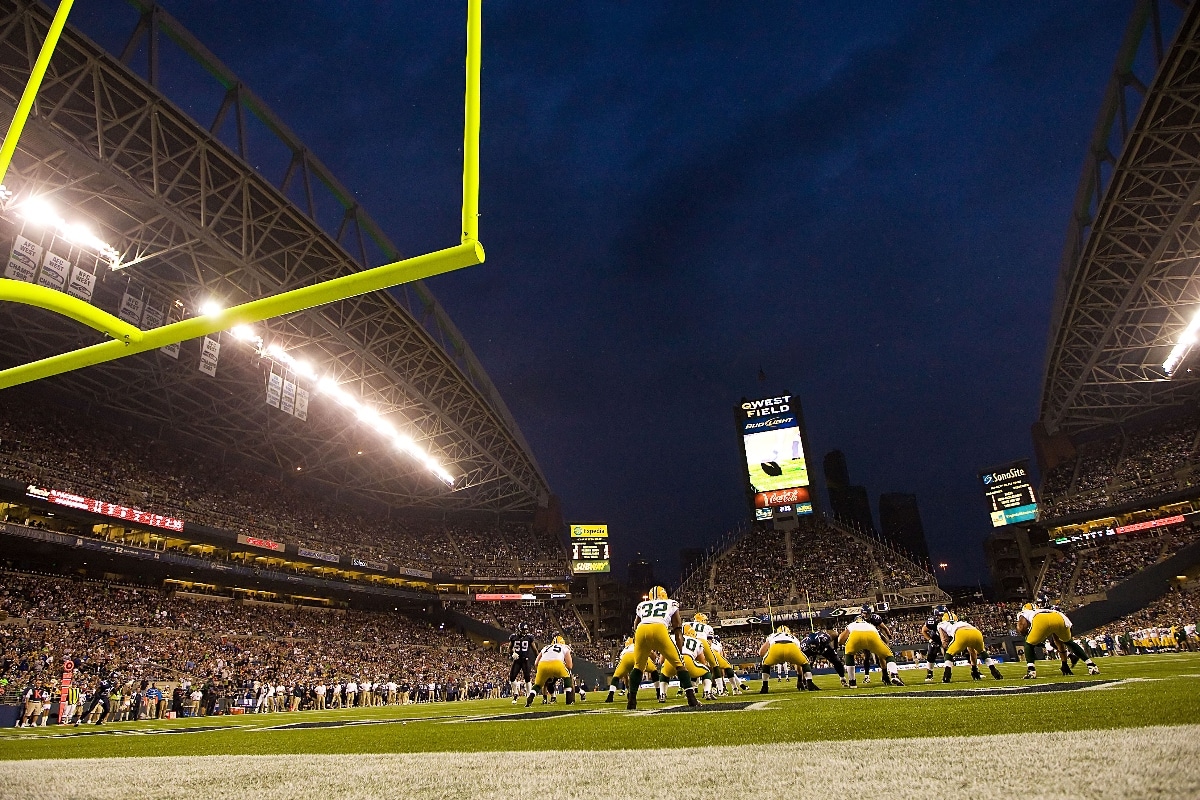
Home-Field Advantage Rankings: The Toughest NFL & CFL Stadiums to Play In
A data-driven ranking of where visiting teams are most likely to lose
Where Home-Field Advantage Actually Changes Results
Some teams play well at home. Some stadiums are loud. But those two factors do not always happen at the same time.
This study identifies where they do, and where that combination actually affects the outcome of games.
Across the National Football League and Canadian Football League, a small number of teams consistently win at home while also playing in front of near-capacity crowds. These are the stadiums where visiting teams are most likely to lose based on performance and crowd support.
The Canada Sports Betting 2026 Home-Field Advantage Index ranks every team using 2024 season data, combining home win percentage with attendance levels. The result is a single Danger Score that shows, clearly and directly, which stadiums give home teams the biggest competitive advantage.
CFL Stadiums with the Strongest Home-Field Advantage
Canada: Key Findings
- Montreal ranks first in the CFL, combining a 63.6% home win rate with crowds that exceed official capacity (106%), creating the league’s toughest environment for visiting teams.
- Winnipeg and Ottawa follow closely, showing that consistent attendance and steady home performance, not stadium size, are what drive real home-field advantage.
- Toronto records the highest home win rate (81.8%), proving teams can dominate at home even without the league’s most intense crowd conditions.
- Edmonton ranks last across both metrics, posting the lowest attendance (36%) alongside a 30% home win rate, a combination that offers little competitive resistance to visiting teams.
Top 5 Toughest CFL Stadiums for Visiting Teams
Home-field advantage in the CFL is not driven by crowd size alone or team performance alone. The most difficult environments for visiting teams combine both. These stadiums consistently turn home support into results, creating conditions where opponents are more likely to lose.
1. Montreal Alouettes (Percival Molson Memorial Stadium)
- Danger Score: 75.45
- Attendance: 106.38%
- Home Win Rate: 63.64%
Montreal ranks first because it combines strong home performance with the most intense crowd conditions in the league. Attendance regularly exceeds official capacity, creating a dense and enclosed environment that builds pressure throughout the game. That combination translates directly into results, making this the toughest venue for visiting teams in Canada.
2. Winnipeg Blue Bombers (Princess Auto Stadium)
- Danger Score: 66.15
- Attendance: 96.36%
- Home Win Rate: 58.33%
Winnipeg stands out for consistency. Crowds remain near capacity across the season, and results follow. The combination is steady rather than extreme, but it makes the stadium a reliably difficult place to play.
3. Ottawa Redblacks (TD Place Stadium)
- Danger Score: 61.96
- Attendance: 75.25%
- Home Win Rate: 70.00%
Ottawa’s ranking is driven by results. A 70 percent home win rate places it among the strongest performers in the league. Even without the highest attendance levels, the team converts home games into wins at a high rate.
4. Toronto Argonauts (BMO Field)
- Danger Score: 61.51
- Attendance: 60.52%
- Home Win Rate: 81.82%
Toronto records the highest home win rate in the CFL. The data shows a performance-driven advantage, where execution on the field outweighs crowd size. Visiting teams face a high likelihood of losing regardless of atmosphere.
5. Hamilton Tiger-Cats (Hamilton Stadium)
- Danger Score: 50.25
- Attendance: 90.21%
- Home Win Rate: 40.00%
Hamilton draws one of the largest crowds in the league, but the results do not follow. The gap between strong attendance and a losing home record limits the stadium’s overall impact.
The Rest of Canada
Outside the top five, most teams show only one side of home-field advantage. Some draw strong crowds but do not convert that support into wins. Others perform closer to league average across both metrics. Without both factors working together, the impact on visiting teams is limited.
- Saskatchewan Roughriders 49.82
- Calgary Stampeders 33.23
- BC Lions 33.74
Where Home Advantage Breaks Down
The Edmonton Elks rank last in the CFL. The team combines the lowest attendance in the league at 36.41 percent with a 30 percent home win rate. With fewer fans and limited success on the field, the stadium creates little sustained pressure. As a result, it is one of the easiest environments for visiting teams.
NFL Stadiums Where Home Advantage Is Strongest
United States: Key Findings
- Buffalo ranks first, combining a perfect 100% home win rate with 94.7% attendance. No team converts home games into wins more consistently.
- Kansas City and Philadelphia follow, with both teams posting a 100% and 91.7% home win rate respectively, backed by attendance levels above 78%.
- Several large-market teams rank near the bottom, where attendance often exceeds 80% but home win rates fall below 40%.
- The pattern is clear: winning drives home-field advantage, with top-ranked teams consistently above 75% at home, regardless of stadium size.
Top 10 Toughest NFL Stadiums to Play In
Home-field advantage in the NFL is driven by two factors: winning and crowd presence. The toughest stadiums for visiting teams combine both. These are the venues where teams consistently win at home while playing in front of large crowds, making them the most dangerous places for opposing teams in competitive terms.
1. Buffalo Bills (Highmark Stadium)
- Danger Score: 93.31
- Attendance: 94.68%
- Home Win Rate: 100.00%
Buffalo ranks first across the NFL. The team won 100% of its home games while drawing 94.7% of capacity. No team combines performance and crowd support more effectively.
2. Kansas City Chiefs (Arrowhead Stadium)
- Danger Score: 84.27
- Attendance: 78.86%
- Home Win Rate: 100.00%
Kansas City also posted a perfect home record. With 78.9% attendance, the advantage is driven primarily by results.
3. Philadelphia Eagles (Lincoln Financial Field)
- Danger Score: 82.60
- Attendance: 85.78%
- Home Win Rate: 91.67%
Philadelphia combines a 91.7% home win rate with 85.8% attendance. The team consistently controls games at home.
4. Minnesota Vikings (U.S. Bank Stadium)
- Danger Score: 81.15
- Attendance: 86.53%
- Home Win Rate: 88.89%
Minnesota pairs an 88.9% home win rate with high attendance. The indoor setting reinforces the home advantage.
5. Washington Commanders (Northwest Stadium)
- Danger Score: 75.28
- Attendance: 89.37%
- Home Win Rate: 77.78%
Washington combines 89.4% attendance with a 77.8% home win rate. Both factors remain consistently strong.
6. Baltimore Ravens (M&T Bank Stadium)
- Danger Score: 73.34
- Attendance: 85.98%
- Home Win Rate: 77.78%
Baltimore maintains a strong home record supported by high attendance across the season.
7. Detroit Lions (Ford Field)
- Danger Score: 69.65
- Attendance: 88.72%
- Home Win Rate: 70.00%
Detroit combines strong fan turnout with a solid home record, creating a stable advantage.
8. Arizona Cardinals (State Farm Stadium)
- Danger Score: 68.01
- Attendance: 89.78%
- Home Win Rate: 66.67%
Arizona performs well across both metrics without reaching the top tier.
9. Denver Broncos (Empower Field at Mile High)
- Danger Score: 67.49
- Attendance: 79.02%
- Home Win Rate: 75.00%
Denver’s advantage is driven by consistent results rather than crowd size alone.
10. Houston Texans (NRG Stadium)
- Danger Score: 64.83
- Attendance: 84.22%
- Home Win Rate: 66.67%
Houston rounds out the top ten with steady performance across both factors.
The Rest of the NFL
Outside the top tier, most teams rely on only one side of home-field advantage. Some draw large crowds but fail to convert them into wins, while others perform closer to league average across both metrics.
At the bottom of the rankings, teams combine weaker home records with less effective crowd influence. The New York Giants and Tennessee Titans rank among the lowest, showing that attendance alone does not create a meaningful advantage.
Expert Insight
“The data shows that home-field advantage isn’t spread evenly across the league. It concentrates in a small number of stadiums where teams consistently win and crowds stay close to full.
When those two factors come together, the effect is predictable. Visiting teams don’t just face noise, they face a higher chance of losing. That’s what turns certain stadiums from home fields into genuinely difficult places to play.”
Conclusion
Home-field advantage is often treated as a general concept, but the data shows it works in a very specific way. Not every stadium gives teams an edge, and not every team benefits equally from playing at home.
Across both the National Football League and Canadian Football League, the same pattern appears. The most difficult venues combine high win rates with strong attendance. That is where home-field advantage translates into results.
At the top of the rankings, teams like Buffalo and Montreal show what that looks like in practice. They win consistently at home while playing in front of full crowds, making those stadiums the places where visiting teams are most likely to lose.
At the bottom, the opposite is true. Lower attendance and weaker home records reduce the impact of playing at home, turning those stadiums into some of the easiest environments for visiting teams.
Methodology
How the Home-Field Advantage Index Was Built
This study compares all teams in the National Football League and Canadian Football League to identify where home-field advantage has the greatest measurable impact on results.
It does not attempt to explain perception or atmosphere in abstract terms. It measures where teams consistently win at home and where visiting teams lose most often.
Data Collection
All metrics are based on the 2024 regular season.
Team performance data, including home wins and total games played, was sourced from official league standings and historical game records. Attendance figures were compiled from publicly available datasets, including game-by-game reports and verified stadium capacity data.
Metrics Used
Home Win Percentage
Calculated as total home wins divided by total home games.
Attendance Percentage
Calculated as average attendance divided by stadium capacity.
Scoring System
Both metrics were normalized on a 0 to 100 scale to allow direct comparison across teams and leagues.
A composite Danger Score was then calculated using the following weighting:
- Home Win Percentage: 60 percent
- Attendance Percentage: 40 percent
This approach prioritizes results while still accounting for the role of crowd presence.
Final Rankings
Teams were ranked from highest to lowest based on their final Danger Score.
Higher scores indicate stadiums where teams consistently win at home while playing in front of larger crowds, creating the conditions where visiting teams are most likely to lose.
Data Sources
- Official NFL standings and game records
- Official CFL standings
- Stadium capacity data from league and public records
- Attendance data from game reports and aggregated datasets
For readers looking to compare how home-field edges translate into real wagering decisions, our guide to the best betting apps breaks down the top mobile options available in Canada.
And for anyone following how regulation shapes the market behind studies like this, our Ontario guide covers the current state of ontario sports betting in more detail.