

If you’ve watched Heated Rivalries, you’ll know that competition goes far deeper than just the scoreboard. It’s driven by pride, history, hard feelings, and the (usually) quiet refusal to let even the smallest grudge go.
And while most of us aren’t NHL stars facing off in front of thousands, we can all relate to that edge of competitiveness. It’s the beer league scrub who turns a weeknight game into a years-long personal vendetta, the coworker keeping an ever-updated mental scoreboard, and the neighbor whose holiday decorations are a clear, direct challenge to yours.
Some places just seem to breed fiercer competitors than others. It’s in the work culture, the way people drive, even how they mow their lawns. To find out which places are home to the continent’s most competitive people, and which ones just talk a big game, we surveyed more than 3,200 people across every US state, Canadian province, and 80 of North America’s biggest cities.
We ranked each location using an index from five components: how competitive people believe they are (Identity), how intensely they compete in everyday scenarios like board games, fitness, and driving (Everyday), how seriously they take sports fandom (Sports), whether they’ve gone to unusual lengths to win, like secretly practicing before a casual game (Behavior), and how much they credit the culture of where they live with making them competitive (Local Culture).
The results might finally explain why your cousin in Winnipeg still can’t let go of a bowling score from 2013.
Key Takeaways
- Windsor, Ontario is the most competitive city in all of North America, edging out cross-bridge rival Detroit, which ranks #3 overall
- Alberta is more competitive than 49 out of 51 US states
- The Rust Belt dominates the city rankings, with Pittsburgh (#2), Detroit (#3), Indianapolis (#4), and Milwaukee (#10) all cracking the top 10
- North Carolina is the most competitive US state overall, leading in both Sports and Behavior score
- Pittsburgh is the most competitive city in the United States, with the highest Local Culture score (59.4) of any US city
- Philadelphia has the highest Sports score (57.7) of any city in North America, while Texas has the highest Identity score (60.6) of any state
O Canada…You Win?
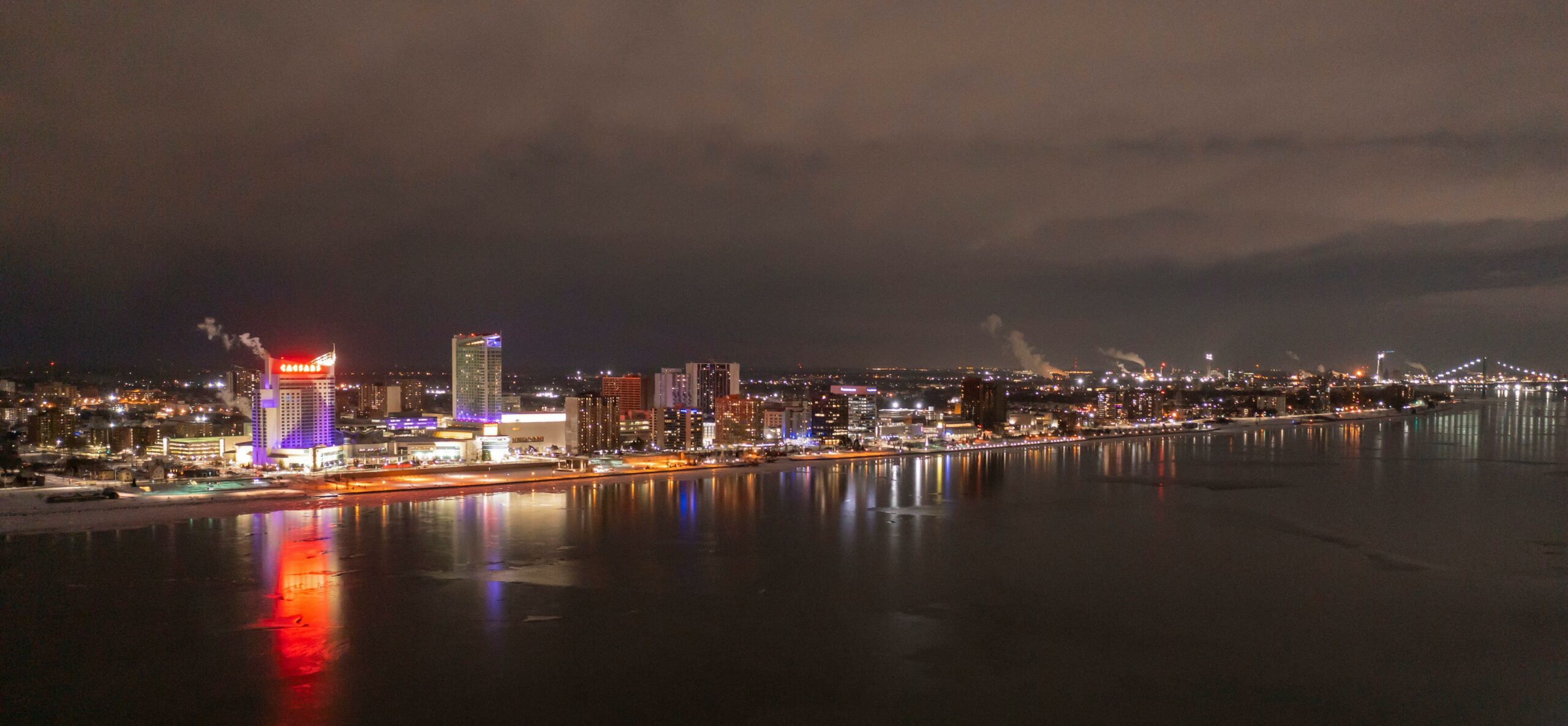
Of all the cities that could have claimed the top spot, Windsor, Ontario probably wasn’t on anyone’s bingo card. But the numbers don’t lie. Windsor scored a perfect 100 on our Competitiveness Index, edging out Pittsburgh (97.6) and Detroit (95.0) to become the most competitive city on the continent.
And here’s the kicker: Windsor and Detroit, the #1 and #3 most competitive cities in North America, are literally connected by a bridge. The Ambassador Bridge, to be specific. If you’ve ever wondered what fuels a cross-border rivalry, try living within eyeshot of your biggest competitor.
The broader Canadian story is just as compelling. Three Canadian provinces cracked North America’s top seven overall, with Alberta (#2), Ontario (#4), and British Columbia (#7) all outranking Texas, Florida, Ohio, and Arizona. Six Canadian cities landed in the top 20. So much for the stereotype of polite, easygoing Canadians. Turns out, they just channel their competitiveness differently.
Alberta, in particular, stands out. It’s more competitive than 49 of 50 US states + D.C., falling behind only North Carolina. And Alberta has the highest Local Culture score (72.2) of any location in the entire dataset, meaning Albertans overwhelmingly believe their region’s culture is what drives their competitive streak. Whether that’s the oil industry hustle, the Flames-Oilers rivalry, or just prairie grit, there’s definitely something in the water.
Rust Belt Grit Runs Deep
If you expected the most competitive American cities to be in sunny, flashy places like Miami or Los Angeles, think again. The Rust Belt absolutely dominates the city rankings. Pittsburgh leads all US cities at #2 overall (and #1 among American cities), followed by Detroit (#3), Indianapolis (#4), and Milwaukee (#10).
These are cities built on steel, manufacturing, and blue-collar pride, places where losing isn’t just disappointing, it’s personal. Pittsburgh alone has a Local Culture score of 59.4, meaning residents credit their city’s identity with shaping how competitive they are. Detroit’s Sports score of 54.8 tells a similar story. Lions, Tigers, Pistons, Red Wings, it doesn’t matter the season. Detroit shows up.
One of the more eye-opening findings? Los Angeles ranks #73 out of 80 cities, and Oakland sits at #79. That’s despite California as a state ranking #3 overall. The state is competitive, but its biggest cities apparently aren’t feeling it. That kind of disconnect between a state and its major metros is rare in this dataset, and it suggests that California’s competitiveness lives in its suburbs and smaller cities rather than its famous urban centers.
Philly Sports, Texas Pride, and the Quiet Intensity of Quebec
The sub-scores in this index tell some of the best stories. Philadelphia, for instance, has the highest Sports score (57.7) of any city. That tracks if you’ve ever been to an Eagles game. Philly fans don’t just watch sports, they live them. It’s not a hobby there; it’s closer to a religion.
Texas, meanwhile, has the highest Identity score (60.6) of any state, meaning Texans see themselves as the most competitive people in the country. The catch? Texas ranks just #6 overall. That gap between self-perception and actual behavior is one of the more entertaining findings in the data. Texans think they’re the most competitive. North Carolinians actually are.
North Carolina leads the nation in both Sports and Behavior scores, which is why it tops the overall state rankings. Between the ACC basketball wars, NASCAR culture, and the Panthers-Hornets-Hurricanes trifecta, competition is woven into daily life there in a way few states can match.
And then there’s Quebec. The province has the lowest Behavior score (13.3) of any location in the entire dataset, states or provinces. Quebecers aren’t secretly practicing before casual games or skipping social events to prepare for competitions. But Quebec’s Sports score is among the highest of any Canadian province. Translation: Quebecers are passionate fans who take their hockey and soccer seriously but don’t let competitiveness bleed into everyday life. It’s a fascinating cultural distinction that sets them apart from nearly everywhere else on the continent.
The Battle of the Border
We also matched up cross-border city rivalries to see which side comes out on top, and the results were split right down the middle.
North of the Border
✅Vancouver 78.9 vs. Seattle 55.2 – The Pacific Northwest goes north by a commanding 23.7 points.
✅Calgary 78.5 vs. Dallas 69.2 – Alberta grit edges out Texas pride by 9.3 points, despite Texas having the highest Identity score of any state.
South of the Border
✅Detroit 95.0 vs. Toronto 71.8 – Motor City dominates by 23.2 points. Not the result Raptors fans want to hear.
✅Boston 85.5 vs. Montreal 60.0 – Bruins-Canadiens energy carries over off the ice. Boston wins by 25.5.
The closest matchup? Calgary vs. Dallas, separated by just 9.3 points. For two cities built on oil money and big egos, that’s about as neck-and-neck as it gets. The widest gap belonged to Boston vs. Montreal, but good luck if you bring that one up at a Canadiens game.
What It All Means
Competitiveness isn’t just about sports or games. It’s about identity, culture, and the stories we tell ourselves about where we come from. Windsor doesn’t have the population or the pro sports teams of, say, New York or Toronto, but its residents believe deeply in their competitive nature, and the data backs them up.
So the next time someone tells you Canadians are too nice to be competitive, just point them toward Windsor. Or better yet, challenge them to a game of Monopoly and find out for yourself.
Methodology
To uncover North America’s most competitive places, we surveyed 3,208 Americans and Canadians (1,752 US residents and 1,456 Canadian residents) across all 50 US states, Washington, D.C., 10 Canadian provinces, the 50 largest US cities, and the 30 largest Canadian cities about their competitive identity, everyday competitiveness, sporting intensity, and the role their region’s culture plays in shaping how competitive they are.
From the results, we built a Competitiveness Index from five weighted components. Competitive Identity (30%) measures self-perceived competitiveness across eight statements, including whether respondents consider themselves competitive, were raised in a competitive household, and have been told they’re too competitive. Everyday Intensity (20%) captures how competitive respondents are across nine everyday scenarios, from board games and fitness to driving and holiday decorating. Sports & Betting (20%) combines favorite team importance, fandom intensity, betting participation, and wager amounts. Competitive Behavior (15%) measures the proportion of six competitive behaviors experienced, such as secretly practicing before casual events or skipping social activities to prepare. Local Culture (15%) captures whether respondents believe their region’s culture makes people more competitive than they would be otherwise.
Individual scores were averaged by location and normalized to a 0-100 scale, where 100 represents the most competitive and 0 the least. Each ranking tier was normalized independently.
All respondents were aged 21+ and based in the United States or Canada. The survey was conducted in February 2026.
Fair Use
Want to share what you’ve found here? Go for it. You can use our data and graphics for non-commercial projects, just add a link to this page as attribution when you do.