
Team Canada’s upper management rightfully drew harsh criticism following a second consecutive quarterfinal exit at last year’s World Juniors. Expecting nothing short of a gold medal is a high bar to clear, and as we have learned, there is a lot of volatility in bringing a championship group together in short order. It’s a highly emotional, pressure-packed tournament contested by teenagers.
But it seemed clear that Hockey Canada’s omissions and tactical approach the last two years were nothing short of a failure. Being the best hockey nation in the world, why is the strategy to play passively, looking to win games 2-1, as if the mindset is to be afraid of the other hockey powerhouses?
Canada to win gold

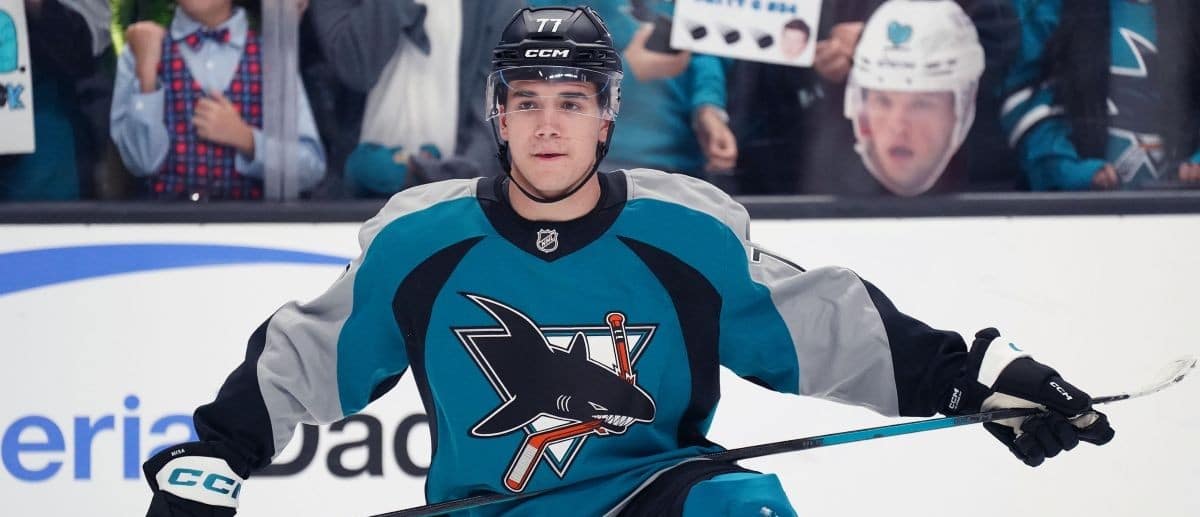
Canada opted to pass on bringing several of their top-scoring options, such as Bennett Sennecke, Michael Misa and Zayne Parekh last year. The team ultimately scored just 13 goals, which tied the record for the fewest of any Canadian side ever in the event. Given that the team ultimately could not score goals in the highest-pressure games, finishing it became quite easy to criticize those omissions following a tournament in which they never looked close to the USA.
Longtime junior executive Alan Millar was appointed the team’s new GM immediately following last year’s failure, while Byron Bonora was brought in as the head scout. Respectfully, almost anyone seems like an upgrade over Dave Cameron as head coach, and that certainly includes Dale Hunter, who’s won WJC gold before and is one of the more proven junior coaches in history.
Canada’s management switched to an 11-day pre-tournament training camp featuring a smaller group of players, as opposed to the previous four-day training camp, which followed selection camps with a larger pool of players. Though their will always be some borderline omissions given the depth of Canada’s talent pool, this year’s omissions are much less debatable than in years past.
Canada will open up the tournament on Boxing Day versus Czechia, the scrappy underdogs that ended their last two tournaments. Most indicators suggest the team is ready to make a statement, and while this is the type of tournament where you never know how a team will come together for certain, Canada looks to be a worthy outright favourite at +100.
Chances are the lines will get shuffled consistently throughout this jam-packed tournament, but here’s a rough estimate of how things will shake out after Canada’s 2-1 win over Sweden in exhibition play last week.
Projected Canada Lineup
Forwards
Gavin McKenna- Michael Hage- Brady Martin
Tij Iginla- Michael Misa- Porter Martone
Caleb Desnoyers- Jett Luchenko- Liam Greentree
Cole Reschny- Cole Beaudoin- Sam O’ Reilly
Defenders
Ethan MacKenzie – Zayne Parekh
Kashawn Aitcheson – Harrison Brunicke
Cameron Reid – Ben Danford
Carson Carels
Goaltenders
Carter George
Jack Ivankovic
Though the USA and Team Sweden will also offer formidable lineups, Canada’s roster offers the greatest depth at every position and is the best on paper.
Canada’s top-two offensive units are loaded with elite talents that could emerge among the tournament scoring leaders, while Jett Luchenko’s unit should provide plenty of energy while also being able to hang in with opponents’ top units.
This feels like a massive tournament for presumptive first overall pick Gavin McKenna, whose play at the NCAA level has been viewed as a slight disappointment this season, though he is still above a point per game against older competition. McKenna has looked strong in pre-tournament action. Michael Hage seems to be a good fit alongside McKenna and has had a tremendous start to his NCAA campaign with the University of Michigan.
If McKenna’s unit should prove surprisingly unproductive, a unit led by 2025 second overall pick Michael Misa certainly has a chance to be among the best trios in the tournament. Misa won the CHL’s MVP title last season and should be primed to be one of the more impactful skaters in this tournament based on his stage of development.
It wouldn’t be surprising to see Tij Iginla be among the fan favourites at this event. He may not have quite the same level of offensive upside as his dad, but he is a Swiss Army Knife who should bring plenty of heart and intangibles to this tournament.
There’s a lot to love about the mix of talent offered on Canada’s blue line, which became a concern after Matthew Schaefer was injured last year.
Zayne Parekh should prove to be an offensive dynamo who will lead the top power-play unit, while there are still numerous high-end shutdown skaters capable of locking it down in the later stages of games.
Kashawn Aitcheson’s stock has continued to rise since being drafted by the New York Islanders last summer and brings a significant physical edge but still has an excellent shot and has high-end offensive upside.
Relative to other contending nations, Canada’s blue line is a massive strength, as arguably all six (or potentially seven) skaters that crack the lineup should be far better than average options in this tournament, and there’s a suitable mix to help cover every situation.
Carter George will likely open the tournament with the chance to earn the number-one role and has had a great start to the year with the Owen Sound. George was far from the problem for Canada at last year’s tournament and remains a convincing option after another year of development and should benefit from playing behind a side that will conceivably own more of the play.
If George should falter, Jack Ivankovic offers another strong option. Ivankovic has played to a 1.90 GAA and .927 save percentage with the University of Michigan this season, and perhaps the only problem in Canada’s crease is that it’s going to feel extremely natural for observers to immediately question which goaltender deserves the top role following any slight hiccups, which can be tough on young goaltenders.
World Juniors Outright Odds & Best Bet
| Team | Odds to win tournament |
| Canada | +100 |
| USA | +210 |
| Sweden | +450 |
| Finland | +1000 |
| Czechia | +1400 |
| Slovakia | +6600 |
| Switzerland | +8000 |
| Germany | +10000 |
| Latvia | +12500 |
| Denmark | +25000 |
Canada is currently priced at +100 to win gold on bet365 following some significant pre-tournament line movement. The USA is up to +210, while Sweden is the third favourite at +450. Finland is priced at +1000, while a much thinner Czechia side is priced at +1400 to steal gold.
When I initially started digging into this year’s tournament, Canada was priced at +150 to win it all. At that number, they were the clear-cut best betting option on the board, and it’s no surprise to see the market movers have bet it down to +100.
Canada has the best roster on paper in the tournament, and it seems that this year’s adjusted process is likely to lead to better results. It feels as though Dave Hunter’s side will be eager to come right out and dominate opponents with a style more conducive to the most talented hockey nation on Earth, which should prove effective.
After losing Ryan Leonard and Gabe Perrault, as well as entering the tournament with an unconvincing pair of goaltenders, the USA could take a step backwards after back-to-back gold medals. That’s still a scary thought to put in writing, but there’s enough question marks that I can see how the odds now suggest this year’s USA side is not quite there with the Canadians.
While I’m a Canadian, I wasn’t afraid to remove my bias and pick against last year’s team when they were overvalued. Even at a modest price of +100, backing Canada to win gold is still my favourite bet from this year’s tournament, as I feel confident that this year’s bunch will get to a gold-medal game where it will presumably be much shorter than +100 to win.